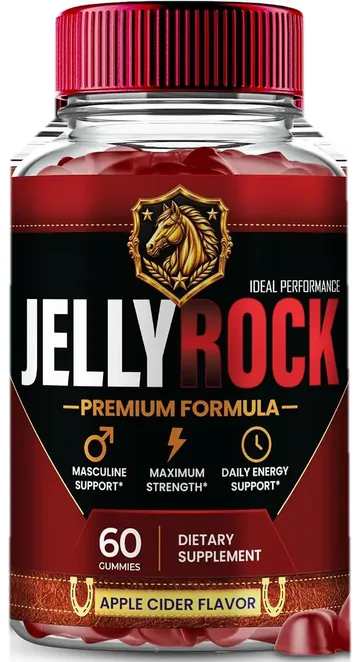
From the blog
Jelly Rock Ingredients List: 7 Items on the Label, Checked One by One
The Jelly Rock label lists seven active items per 2 gummies: vitamin B6 1.4 mg, vitamin B12 2 mcg, folate 1,000 mcg DFE, iodine 100 mcg, apple cider vinegar complex 1,000 mg, and 80 mcg each of beet root and pomegranate. It does not list L-arginine or any herb known for testosterone.
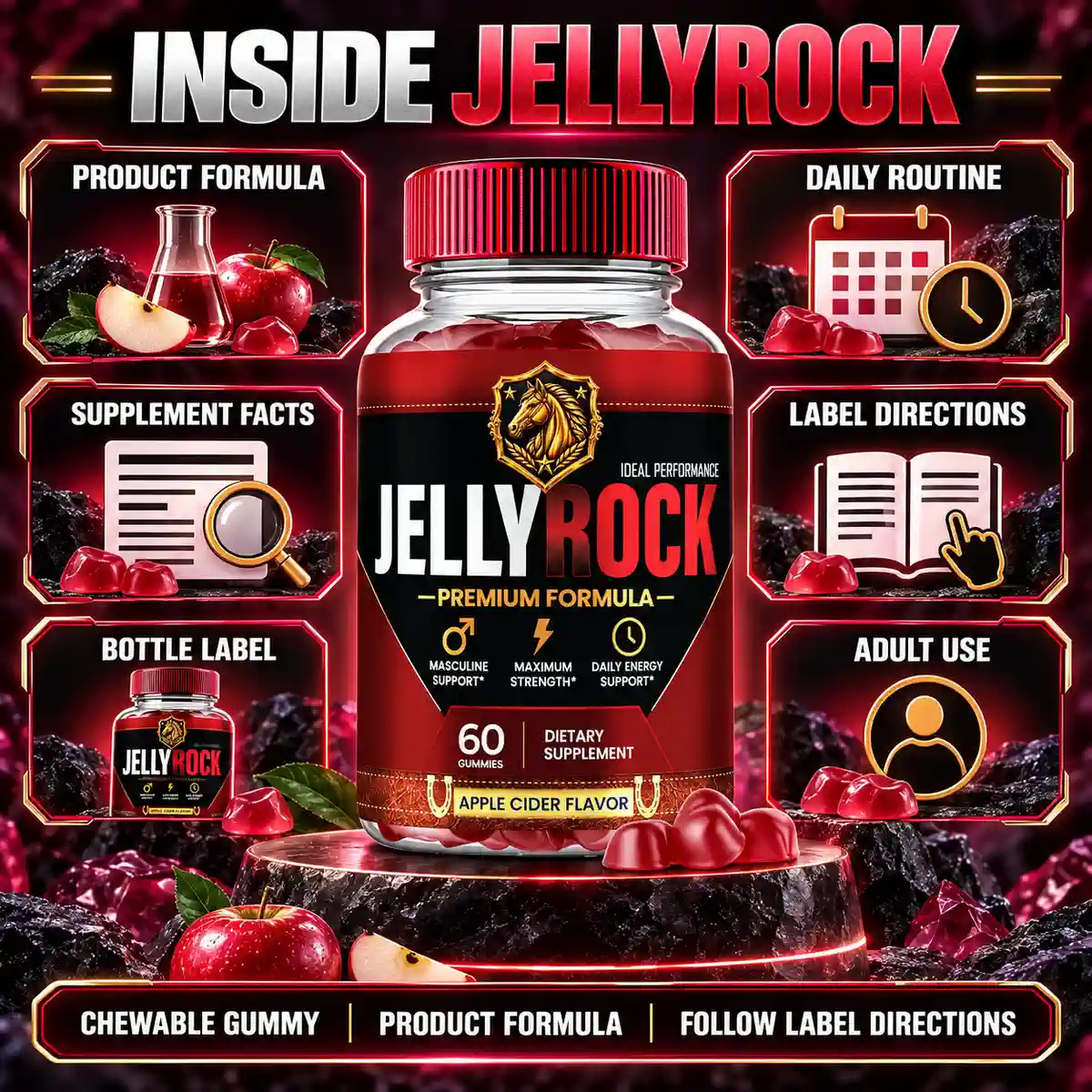
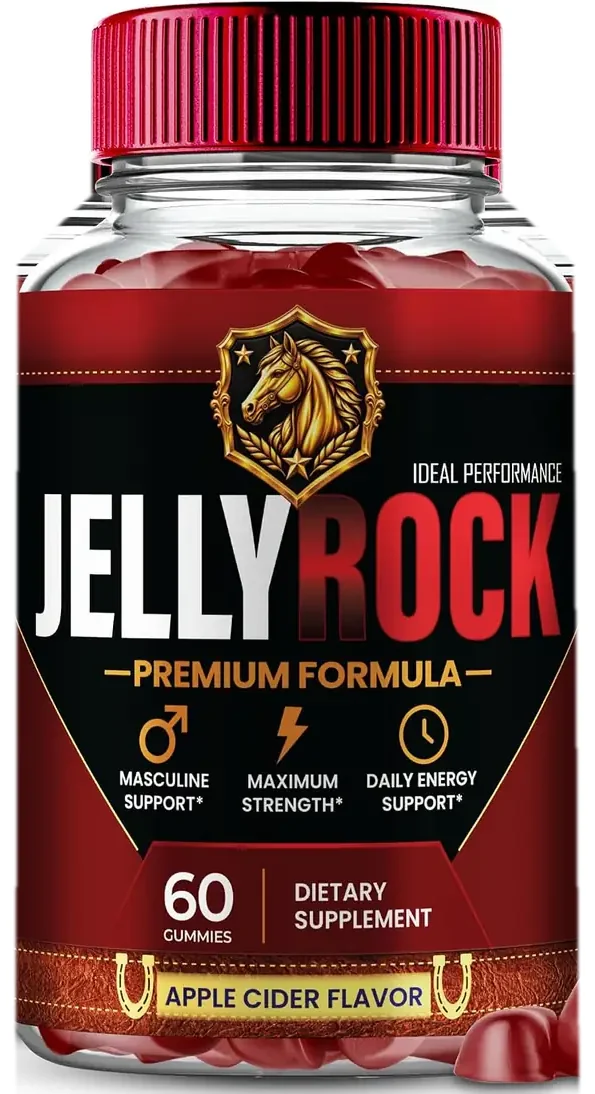
Want to compare this list with the real panel? The order page shows the pack sizes, and the jar’s back label carries the same seven lines.
See today’s price and guaranteeThis site earns when you buy through its links. It is not the maker.Where do the Jelly Rock ingredients come from in this article?
Every amount below comes from the Supplement Facts panel printed on the jar. We did not take numbers from ads, and we did not guess. When the panel is silent, we say “not published.”
The panel gives amounts per serving, and a serving is 2 gummies. So when you read “1.4 mg of B6,” that is the amount in two gummies, not in one. If you chew only one, you get half. The jar says two.
We go through the seven active items in the order the panel prints them. After that we look at the gummy base, and at two things people ask about that the label does not list.
Check 1: What does vitamin B6 do, and how much is in Jelly Rock?
The label lists vitamin B6 as pyridoxine HCl, 1.4 mg per serving. B6 helps enzymes handle protein and helps make red blood cells and chemical messengers in the brain. The daily need is 1.3 mg for adults from 19 to 50 and 1.7 mg for men past 50, with a ceiling of 100 mg (NIH Office of Dietary Supplements, “Vitamin B6: Fact Sheet for Health Professionals”).
So a serving gives about as much B6 as a day’s need. The jar prints 88% of the Daily Value, but against the current FDA value of 1.7 mg the sum is about 82%. The gap is small and is not a safety problem. It does show that the printed percentages were not rechecked.
Check 2: What about vitamin B12?
Vitamin B12 appears as cyanocobalamin, 2 mcg per serving. The body needs it for red blood cells and nerves. Adults need 2.4 mcg a day, and no upper limit has been set (NIH Office of Dietary Supplements, “Vitamin B12: Fact Sheet for Health Professionals”).
The jar prints 100% of the Daily Value. Against 2.4 mcg the sum is about 83%. People over 50, vegans and people who take metformin or acid reducers are more likely to run low on B12, so those readers may care most about this line.
Check 3: Why is the folate line the one to read twice?
The folate line says 1,000 mcg DFE, and in brackets “600 mcg folic acid.” DFE means dietary folate equivalents. Folic acid counts for more than natural folate in that scale, which is how 600 mcg of folic acid becomes 1,000 mcg DFE.
The Daily Value for folate is 400 mcg DFE. A serving therefore gives 250%, even though the jar prints 100%. That is the biggest mismatch on the panel (U.S. Food and Drug Administration, “Daily Value on the Nutrition and Supplement Facts Labels”).
An adult should take no more than 1,000 mcg of folic acid a day from pills and fortified foods, and 600 mcg is 60% of that ceiling. A lot of folic acid can mask the anemia of low vitamin B12 while nerve problems go on, so tell your doctor you take it, above all before B12 tests (NIH Office of Dietary Supplements, “Folate: Fact Sheet for Health Professionals”).
Check 4: How much iodine is in a serving?
Iodine is listed as potassium iodide, 100 mcg. The thyroid gland builds its hormones from iodine. Adults need 150 mcg a day and should stay under 1,100 mcg, so a serving sits well inside the limit (NIH Office of Dietary Supplements, “Iodine: Fact Sheet for Health Professionals”).
The jar prints 67%, and that one matches the sum. If you have a thyroid condition or take thyroid medicine, ask your doctor before you start. Iodine in a multivitamin adds to the total.
Key facts
- Serving: 2 gummies. A jar has 60 gummies, so 30 servings.
- Vitamins and mineral: B6 1.4 mg, B12 2 mcg, folate 1,000 mcg DFE, iodine 100 mcg.
- Vinegar: 1,000 mg apple cider vinegar complex.
- Trace powders: beet root and pomegranate, 80 mcg each.
- Not on the panel: L-arginine, caffeine, any herb known for testosterone.
- Contains: gelatin, so it is not vegetarian.
- Sugar: 4 g per serving, all added.
Check 5: What does 1,000 mg of apple cider vinegar mean?
The vinegar line is an “apple cider vinegar complex” of 1,000 mg. It combines apple cider vinegar powder, which provides 5% total acid, with unrefined liquid apple cider vinegar. One thousand milligrams is one gram.
To picture it, a tablespoon of liquid vinegar weighs about 15 grams. A serving of Jelly Rock holds roughly one fifteenth of that by weight. Small, short studies have looked at vinegar and blood sugar after meals, and at body weight, with modest results (Mayo Clinic, “Apple cider vinegar for weight loss: Does it work?”).
Vinegar is acidic. It can irritate the throat and wear tooth enamel, so a sip of water after chewing is sensible. Larger amounts may interact with diuretics, insulin and some heart medicines.
Check 6: Are beet root and pomegranate real doses?
Both lines read 80 mcg. That is 0.08 mg each. Studies on beet root use juice with hundreds of milligrams of nitrate, and studies on pomegranate use grams or hundreds of milligrams of extract. Next to those, 80 mcg is a trace.
We read these two lines as label names, not working doses. They do no harm at this amount, and we would not count on them for anything.
Check 7: What is in the gummy base, and what is not listed at all?
The other ingredients are rice flour, microcrystalline cellulose, magnesium stearate (printed on the jar as “Strearate”), titanium dioxide and gelatin. Gelatin is animal-derived. Titanium dioxide is a white color additive that the U.S. still allows in food, while the European Union stopped allowing it as a food additive in 2022.
| Question | Answer from the label |
|---|---|
| Is L-arginine listed? | No |
| Is any herb known for testosterone listed? | No |
| Is caffeine listed? | No |
| Is gelatin listed? | Yes |
| Where does the 4 g of added sugar come from? | Not named |
| Is an allergen statement shown? | Not shown in the images |
Some people search for “Jelly Rock L-arginine” because they have seen the amino acid in other men’s products. It is not on this panel. We will not pretend it is, and we will not guess at hidden blends. Each active here has its own number, so there is no proprietary blend.
What should you do with this list before you buy?
A list is only useful if you act on it. Before you order, put your own medicine and supplement list next to the seven lines above and look for overlaps.
- Write down every vitamin, mineral and herbal product you already take, with the dose.
- Find any folic acid and any iodine on those labels, and add them to 600 mcg and 100 mcg.
- Note any medicine for thyroid, diabetes, fluid or heart rhythm, and ask your pharmacist about vinegar and iodine.
- Decide whether gelatin and 4 g of added sugar are acceptable to you.
- Keep the jar’s lot code with your notes, so you can match it later.
None of this takes long, and it turns a vague worry into a clear question you can bring to a clinician. That is also the kind of preparation that makes a short appointment useful.
Sources used in this article
- NIH Office of Dietary Supplements. Vitamin B6: Fact Sheet for Health Professionals.
- NIH Office of Dietary Supplements. Vitamin B12: Fact Sheet for Health Professionals.
- NIH Office of Dietary Supplements. Folate: Fact Sheet for Health Professionals.
- NIH Office of Dietary Supplements. Iodine: Fact Sheet for Health Professionals.
- Mayo Clinic. Apple cider vinegar for weight loss: Does it work?.
- U.S. Food and Drug Administration. Daily Value on the Nutrition and Supplement Facts Labels.
- The Jelly Rock jar label and the pages of this site: JellyRock ingredients, Supplement facts.
Frequently asked questions
What are the ingredients in Jelly Rock?
In two gummies you get 1.4 mg of B6, 2 mcg of B12, 1,000 mcg DFE of folate (from 600 mcg of folic acid), 100 mcg of iodine and 1,000 mg of the vinegar complex. Beet root and pomegranate powders come in at 80 mcg each.
Does Jelly Rock contain L-arginine?
No. L-arginine is not on the Supplement Facts panel.
Is there any ingredient for testosterone?
No. Nothing on the panel is an herb or compound known for testosterone. Only a listing image uses the words natural hormonal support.
Is Jelly Rock vegetarian?
No. Gelatin is listed among the other ingredients, so the gummies are not vegetarian or vegan.
How much sugar is in a serving?
A serving of 2 gummies has 4 g of sugar, all of it added, plus 20 calories and 5.7 g of carbohydrate.
Are the printed percentages right?
Several are not. Folate is printed as 100% but works out to 250%. B6 works out to about 82% and B12 to about 83% against current FDA Daily Values.
Our view
Read as a list, Jelly Rock is a gummy built on B vitamins and iodine, plus a gram of vinegar and two trace powders. That is a reasonable daily product for a man with a patchy diet. It is not an exotic formula. It is also not FDA approved, as no supplement is.
We like that every active has its own printed amount. We do not like the wrong percentages or the front-label wording that nothing on the panel supports. Check your own multivitamin for folic acid and iodine before you add this, tell your doctor about it, and use our label-reading steps when your jar arrives.
Last updated . Written by the JellyRock Editorial Desk and medically reviewed by Dr. Casey McCraw, MD.
Want to see the jar for yourself?
You now know every line on the panel. If a B-vitamin, iodine and vinegar gummy is what you were looking for, the order page shows today’s price and the return terms before you pay.
Sold through a U.S. retail desk for JellyRock. This site is not the manufacturer and earns when you buy.