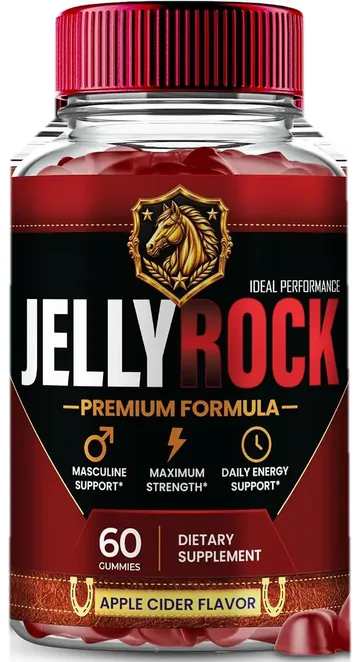
From the blog
Jelly Rock Supplement Facts: How to Read the Label in 6 Steps
To read the Jelly Rock label, start with the serving size, 2 gummies, then check calories and sugar, the four vitamin and mineral lines, the vinegar line and the footnotes. Several printed %Daily Values do not match current FDA numbers: folate is printed as 100% but works out to 250%.
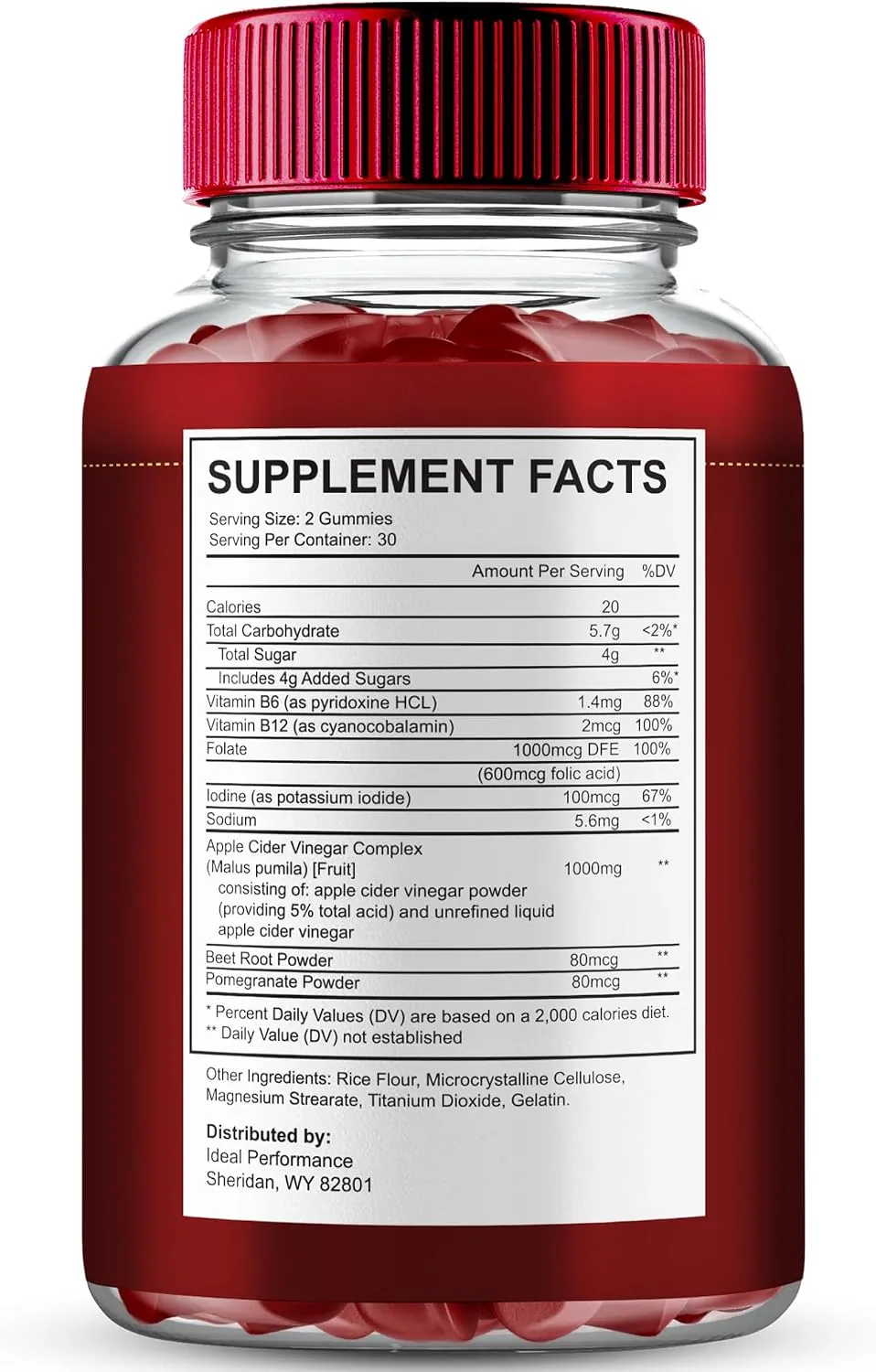
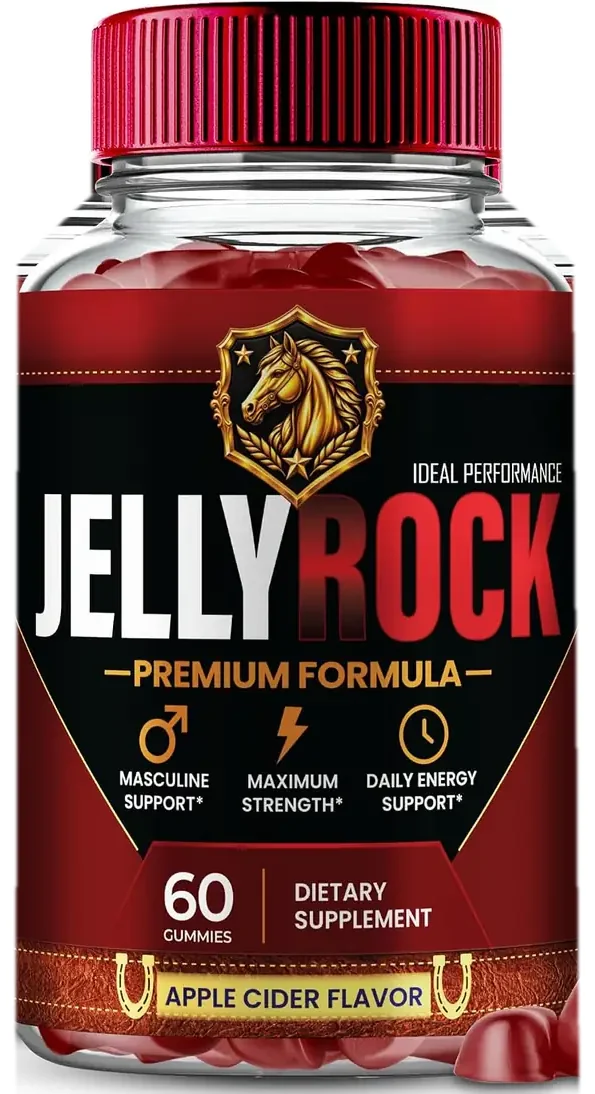
If you would rather hold the jar and check the panel yourself, the order page shows the pack sizes and the return terms.
See today’s price and guaranteeThis site earns when you buy through its links. It is not the maker.Step 1: Where do you find the serving size?
Turn the jar to the back panel. The first line under the title is the serving size, and it says 2 gummies. The next line gives servings per container: 30, which equals the 60 gummies in the jar.
Everything below those lines is per serving. This is the step people skip, and it is why some ads quote one gummy while the jar says two. If you take one gummy, halve every number on the panel. If you take two, as the jar directs, use the numbers as printed.
Step 2: What do calories, carbohydrate and sugar tell you?
A serving has 20 calories and 5.7 g of total carbohydrate. The panel then lists 4 g of total sugar and 4 g of added sugars. The jar prints 6% for added sugars. The FDA bases its figure on 50 g a day, so 4 g is really 8% (U.S. Food and Drug Administration, “Daily Value on the Nutrition and Supplement Facts Labels”).
Four grams of sugar is small, but it is not zero. The base ingredients do not name where the sugar comes from. A person counting sugar closely, or one with diabetes, should factor it in and ask a doctor about the vinegar too.
Step 3: How do you check the four vitamin and mineral lines?
Four lines carry a printed Daily Value: vitamin B6, vitamin B12, folate and iodine. Take the printed amount, divide it by the current Daily Value and compare with the printed percentage. The table does that for you.
| Line | Amount | Jar says | Our sum |
|---|---|---|---|
| B6 | 1.4 mg | 88% | 82%, roughly |
| B12 | 2 mcg | 100% | 83%, roughly |
| Folate | 1,000 mcg DFE | 100% | 250% |
| Iodine | 100 mcg | 67% | 67% |
Only iodine matches. Folate is off by a wide margin, and the other two lean a little high. None of this makes the product unsafe on its own, but it suggests the panel was not checked against the current FDA table.
Step 4: What do the DFE and folic acid brackets mean?
The folate line reads “1,000 mcg DFE (600 mcg folic acid).” DFE is a way to count folate that treats folic acid as stronger than the folate in food. The bracket tells you the actual weight of folic acid in a serving, which is 600 mcg.
That bracket is the figure to compare with other supplements. The ceiling for folic acid from pills and fortified foods is 1,000 mcg a day. Pair the gummies with a multivitamin that has 400 mcg and you land exactly on that ceiling (NIH Office of Dietary Supplements, “Folate: Fact Sheet for Health Professionals”).
Key facts
- Serving size: 2 gummies. Servings per jar: 30.
- Calories: 20 per serving. Carbohydrate: 5.7 g. Sugar: 4 g, all added.
- Sodium: 5.6 mg per serving.
- Lines with a Daily Value: B6, B12, folate and iodine.
- Lines with no Daily Value: apple cider vinegar complex, beet root powder, pomegranate powder.
- Spelling slip: the jar prints “Strearate” for magnesium stearate.
- Distributor line: Ideal Performance, Sheridan, WY 82801.
Step 5: How do you read the vinegar and trace lines?
These three lines have no Daily Value. A footnote says a Daily Value is not established. That does not mean the amounts are hidden. The vinegar complex is 1,000 mg, and beet root powder and pomegranate powder are 80 mcg each.
Think in weights. One milligram is one thousand micrograms. So the vinegar line is many times heavier than either trace line, and beet root or pomegranate is a tiny fraction of a milligram. Our ingredient article says what that means for each one.
Step 6: What is the fine print under the panel?
Look for three things. First, the footnote that percent Daily Values rest on a 2,000 calorie diet. Second, the “other ingredients” line: rice flour, microcrystalline cellulose, magnesium stearate, titanium dioxide and gelatin. Third, the “Distributed by” line.
Then check the side of the jar. It carries the suggested use, the caution and the storage line. The caution says pregnant or nursing mothers, children under 18 and people with a known medical condition should consult a physician. It also says adult use only, keep out of the reach of children, and do not use if the safety seal is damaged or missing.
Finally, notice what the label does not say. It names no factory, shows no testing certificate and makes no testosterone claim. The lot code JEL-26/JE-4692 and the CoA code JEL-4692-26-JE are label codes. They help match a jar to a batch. They are not lab proof.
What if your jar looks different from this one?
Labels change. Newer stock may carry a newer code, and a printer may fix the spelling slip. If your jar shows different amounts from those above, trust your jar. A panel with different amounts is also a reason to ask the seller whether you hold the same product.
How do you compare this panel with another product’s panel?
You do not have to name another product to compare. You only need a method, and the method is the same each time.
- Match the serving size first. One product may count a serving as one gummy, and another as two.
- Match the units. Milligrams and micrograms look alike and differ by a factor of one thousand.
- Match the form. Folic acid, folate and DFE are not the same number, and cyanocobalamin is one form of B12.
- Ask what each line does at that amount, not just whether it is present.
- Check whether the printed percentages match the current FDA table.
Do this with two jars side by side and the differences show quickly. A line that looks impressive in a name can turn out to be a trace in the weights. That is why we put the units in bold when we write about this label.
Does the panel back the words on the front of the jar?
Compare the claims with the lines. The table sets the front-label wording against what the panel supports.
| Wording | What the panel shows |
|---|---|
| Daily Energy Support | B6, B12 and folate help the body use food for energy, mostly if you were low |
| Masculine Support | Nothing on the panel targets testosterone; iodine supports the thyroid |
| Maximum Strength | No strength ingredient; a marketing phrase, not a dose |
| Natural hormonal support | Only thyroid support through iodine |
| Premium Formula | A name; the panel shows ordinary vitamins, iodine and vinegar |
The first row is fair. The rest go beyond what the numbers show. You are free to like the product for what it is while reading the slogans as slogans.
Sources used in this article
- U.S. Food and Drug Administration. Daily Value on the Nutrition and Supplement Facts Labels.
- NIH Office of Dietary Supplements. Vitamin B6: Fact Sheet for Health Professionals.
- NIH Office of Dietary Supplements. Vitamin B12: Fact Sheet for Health Professionals.
- NIH Office of Dietary Supplements. Folate: Fact Sheet for Health Professionals.
- NIH Office of Dietary Supplements. Iodine: Fact Sheet for Health Professionals.
- The Jelly Rock jar label and the pages of this site: Supplement facts, Check your jar.
Frequently asked questions
What is the serving size on the Jelly Rock label?
The serving size is 2 gummies, and the jar holds 30 servings. Every amount on the panel is per 2 gummies.
Why do the printed percentages not match?
Several printed values disagree with the current FDA table. The jar says 100% for folate, yet the sum is 250%. B6 comes to about 82% and B12 to about 83%.
How much sugar does a serving have?
A serving has 4 g of sugar, all of it added, which is 8% of the 50 g Daily Value for added sugars.
What does DFE mean?
DFE stands for dietary folate equivalents. It is a scale that counts folic acid as stronger than folate from food. The jar’s 1,000 mcg DFE comes from 600 mcg of folic acid.
Do the lot and CoA codes prove testing?
No. JEL-26/JE-4692 and JEL-4692-26-JE are label codes for matching a jar to a batch. No lab certificate is published.
Is anything on the panel about testosterone?
No. None of the ingredients is known for testosterone, and no line mentions it.
Our view
A good label lets you check it, and this one does. Every amount is printed, so you can do the sums yourself. The sums show a panel with several wrong percentages and one misspelled word. We think that is careless, not sinister. The jar is not FDA approved, like every supplement.
Our advice is simple. Read the serving size first, trust the amounts over the percentages, and keep your own list of everything you take. If a line confuses you, ask your doctor or a pharmacist to read the panel with you.
Last updated . Written by the JellyRock Editorial Desk and medically reviewed by Dr. Casey McCraw, MD.
Want to see the jar for yourself?
A label is easier to judge with the jar in your hand. If you decide to order, the page shows the price at checkout and how a return works.
Sold through a U.S. retail desk for JellyRock. This site is not the manufacturer and earns when you buy.