From the blog
How %Daily Value Is Calculated: A Line-by-Line Check of the JellyRock Label
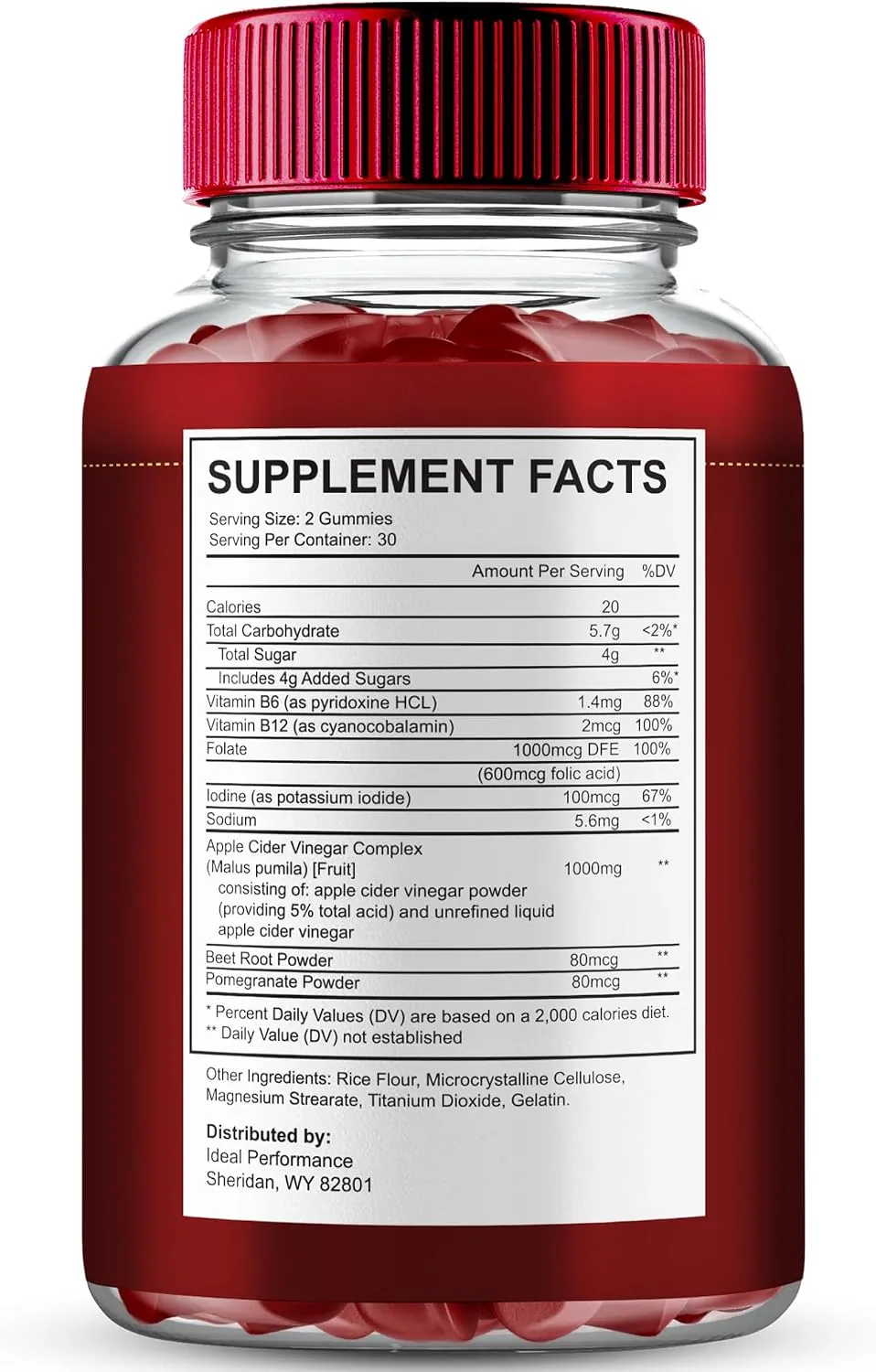
%Daily Value is the amount in one serving divided by the FDA’s Daily Value for that nutrient, times 100. On the JellyRock jar, folate is printed as 100% DV, but 1,000 mcg DFE divided by the 400 mcg DFE Daily Value is 250%. B6 and B12 are also printed higher than they work out. Iodine (67%) is correct.
What %Daily Value is for
The %Daily Value column is the quickest way to judge a supplement. Instead of asking you to know how much vitamin B12 an adult needs, the label does the math for you: this serving gives you this share of a reference amount.
That reference amount is the Daily Value (DV), set by the U.S. Food and Drug Administration. It is one number per nutrient, used on every Nutrition Facts and Supplement Facts label, so you can compare products fairly.
Because shoppers lean on this column, it matters when it is wrong. A %DV that is too low can make a product look weaker than it is. A %DV that is too low for something with an upper limit, like folic acid, can make a high dose look ordinary.
The formula
The math is simple: %DV = (amount per serving ÷ Daily Value) × 100.
So if a serving has 1.2 mg of a vitamin whose Daily Value is 1.2 mg, it is 100% DV. If it has 0.6 mg, it is 50%. Labels round these numbers, but rounding moves them a little, not by dozens of points.
The only other thing you need is the right Daily Value. The FDA updated many of them in its 2016 label rule, and labels had to switch over in the following years. Some old numbers changed a lot.
| Nutrient | Current FDA Daily Value | Older Daily Value |
|---|---|---|
| Vitamin B6 | 1.7 mg | 2 mg |
| Vitamin B12 | 2.4 mcg | 6 mcg |
| Folate | 400 mcg DFE | 400 mcg (as folic acid) |
| Iodine | 150 mcg | 150 mcg |
| Added sugars | 50 g | None set |
| Sodium | 2,300 mg | 2,400 mg |
What “DFE” means for folate
Folate is the one nutrient where the unit itself changed. Labels now show folate in : Dietary Folate Equivalents.
Folic acid, the form used in supplements, is absorbed better than the folate in food. So each microgram of folic acid counts as about 1.7 mcg DFE. That is why the JellyRock panel says “1000mcg DFE (600mcg folic acid)”: 600 × 1.7 is about 1,000 (NIH Office of Dietary Supplements, “Folate: Fact Sheet for Health Professionals”).
The Daily Value for folate is 400 mcg DFE. So 1,000 mcg DFE is 250% of the Daily Value, not 100%.
The JellyRock panel, line by line
Here is every line with a printed %DV, next to the number you get from the formula with current Daily Values. Toggle between them below.
- Vitamin B61.4 mg88%check
- Vitamin B122 mcg100%check
- Folate1,000 mcg DFE100%check
- Iodine100 mcg67%matches
“Worked out” uses the current FDA Daily Values: B6 1.7 mg, B12 2.4 mcg, folate 400 mcg DFE, iodine 150 mcg (U.S. Food and Drug Administration, “Daily Value on the Nutrition and Supplement Facts Labels”).
| Line | Amount | Printed %DV | Worked out | Match? |
|---|---|---|---|---|
| Vitamin B6 | 1.4 mg | 88% | 82% | No |
| Vitamin B12 | 2 mcg | 100% | 83% | No |
| Folate | 1,000 mcg DFE | 100% | 250% | No |
| Iodine | 100 mcg | 67% | 67% | Yes |
| Added sugars | 4 g | 6% | 8% | No |
| Sodium | 5.6 mg | <1% | <1% | Yes |
| Total carbohydrate | 5.7 g | <2% | About 2% | Close |
Could the old Daily Values explain it?
A common reason for odd %DVs is a label that still uses the older Daily Values. We checked that too. With the older values, B6 would be 70% (1.4 ÷ 2), B12 would be 33% (2 ÷ 6), and 600 mcg of folic acid would be 150% (600 ÷ 400).
None of those match the printed numbers either. So the gaps are not simply an old label. The printed column looks like it was copied from another formula or filled in without the math.
Why the folate gap matters most
Most of the gaps are small and in the “harmless” direction. The folate gap is different. A shopper who sees “100%” thinks they are getting a normal daily amount. In fact the jar gives 600 mcg of folic acid, which is 60% of the 1,000 mcg upper limit for folic acid from supplements and fortified foods (NIH Office of Dietary Supplements, “Folate: Fact Sheet for Health Professionals”).
That is still within the safe range for most adults. But if you also take a multivitamin with 400 mcg of folic acid, you reach the upper limit. And high folic acid intake can hide the anemia of a vitamin B12 deficiency, which matters most for older adults.
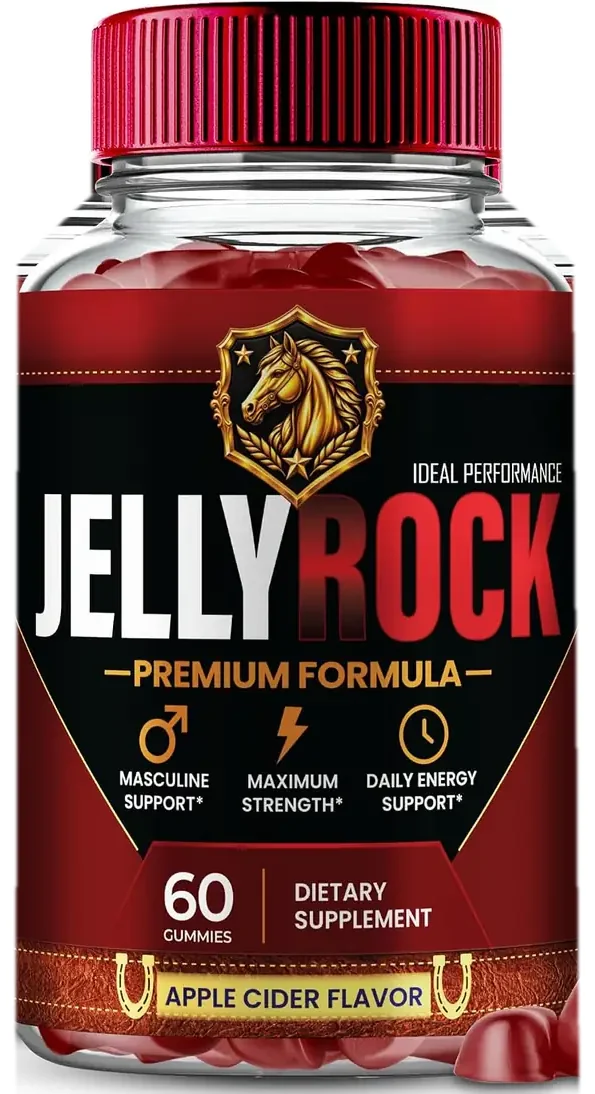
See the full JellyRock label and packs.
Check today’s priceWhat the correct numbers tell you about the formula
Read with correct %DVs, the JellyRock label is clearer. B6 and B12 are a little under 100%, roughly what a basic multivitamin gives. Iodine is two thirds of a day’s need. Folate is two and a half times the Daily Value.
That is a sensible vitamin top-up for someone whose diet is short on these nutrients (NIH Office of Dietary Supplements, “Vitamin B12: Fact Sheet for Health Professionals”). It is not a formula built around testosterone or strength, whatever the front label says.
How to check any label yourself
Find the amount and unit
For example, 1.4 mg.
Look up the Daily Value
Use the FDA’s Daily Value table.
Divide and multiply by 100
1.4 ÷ 1.7 × 100 = 82%.
Watch the units
mcg vs. mg vs. mcg DFE. A unit mix-up is the most common cause of big errors.
Check upper limits
For folic acid, iodine, vitamin D, zinc and B6, compare your total daily intake with the upper limit.
Other label details worth a second look
- Serving size: all amounts are per 2 gummies. One gummy gives half.
- Added sugars: the label says all 4 g of sugar are added, but the other-ingredients list does not name a sugar.
- Spelling: “Magnesium Strearate” should be “stearate.” Small, but another sign the label was not proofread.
- Distributor: Ideal Performance, Sheridan, WY. That is where questions about the label should ultimately go.
The bottom line
%Daily Value is simple division, and anyone can check it. On the JellyRock jar, iodine and sodium check out, but folate is printed at 100% when it is 250%, and B6, B12 and added sugar are also off.
None of this makes the gummy dangerous for most adults. It does mean you should read the amounts, not the percentages, and add up folic acid from everything you take.
Sources
- U.S. Food and Drug Administration. Daily Value on the Nutrition and Supplement Facts Labels. FDA, current revision. Checked September 30, 2026.
- NIH Office of Dietary Supplements. Folate: Fact Sheet for Health Professionals. NIH ODS, current revision. Checked September 30, 2026.
- NIH Office of Dietary Supplements. Vitamin B6: Fact Sheet for Health Professionals. NIH ODS, current revision. Checked September 30, 2026.
- NIH Office of Dietary Supplements. Vitamin B12: Fact Sheet for Health Professionals. NIH ODS, current revision. Checked September 30, 2026.
- NIH Office of Dietary Supplements. Iodine: Fact Sheet for Health Professionals. NIH ODS, current revision. Checked September 30, 2026.
Questions on this topic
More answers on the full FAQ page.
How is %Daily Value calculated?
Amount per serving ÷ the FDA Daily Value × 100.
What is the Daily Value for folate?
400 mcg DFE. 1,000 mcg DFE is therefore 250%.
Is JellyRock’s folate %DV correct?
No. It is printed as 100%, but it works out to 250%.
What does DFE mean?
Dietary Folate Equivalents. 1 mcg of folic acid counts as about 1.7 mcg DFE.
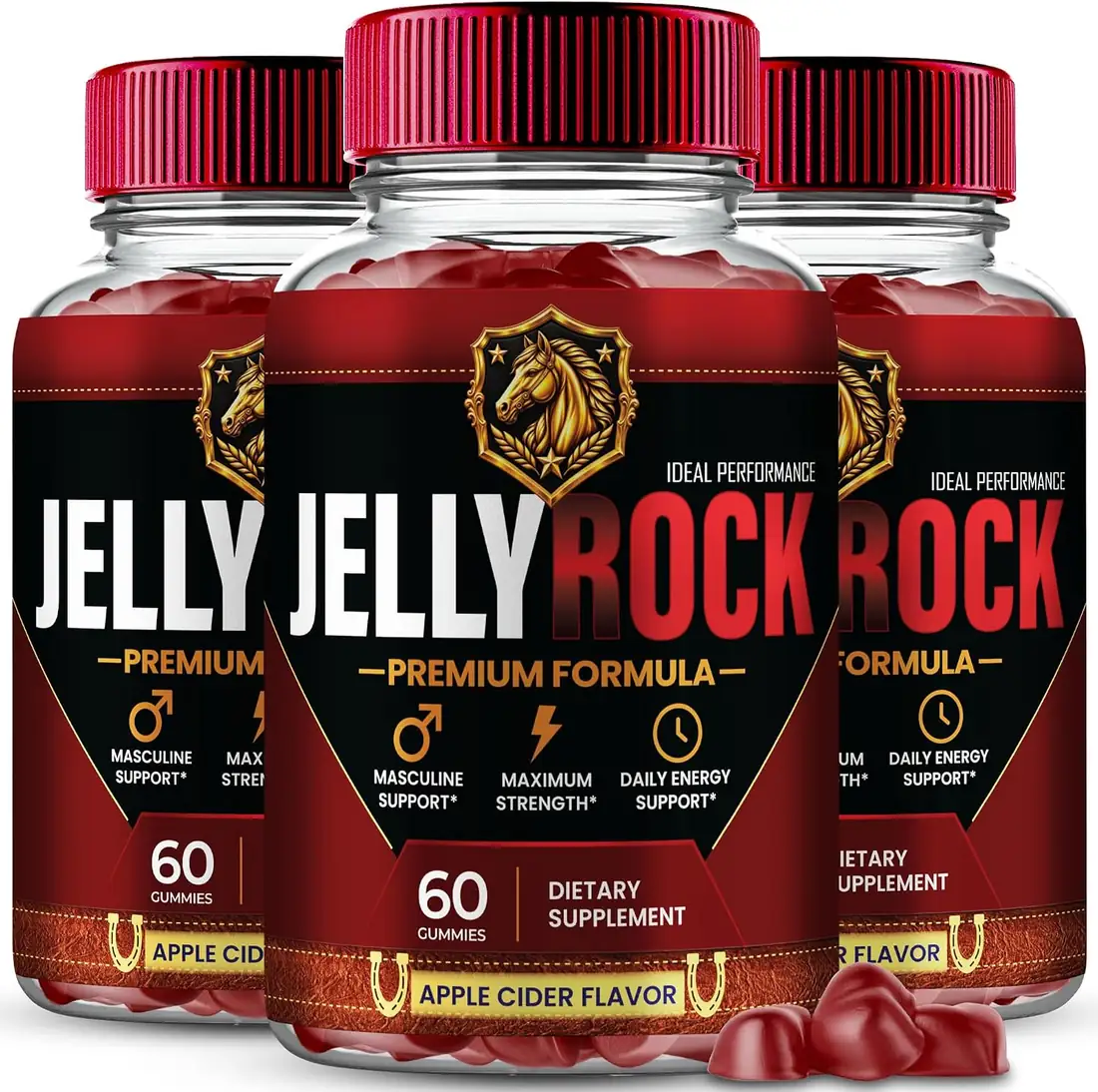
Ready to try JellyRock?
Pick a pack and see the price at checkout. Refunds follow the Amazon return window, unless the seller prints a longer one. Questions first? The contact page shows which desk to use.
Sold through a U.S. retail desk for JellyRock. This site is not the manufacturer and earns when you buy.Keep reading
Apple cider vinegar gummies
What 1,000 mg of apple cider vinegar in a gummy means: how it compares with liquid vinegar…
Read more →B vitamins and energy
Do B vitamins give you energy? What B6, B12 and folate do, who is likely to be low, what J…
Read more →JellyRock ingredients
B vitamins, iodine, apple cider vinegar and two trace powders.
Read more →