From the blog
Testosterone Booster Gummies: 7 Checks Before You Buy (Jelly Rock Included)
A testosterone booster gummy is only as good as its label. Check for an ingredient with real evidence, a printed dose, claims that match the panel, safety notes and a refund route. Jelly Rock lists B vitamins, iodine and vinegar, no ingredient known for testosterone, so we do not call it a booster.
Want to test the seven checks on a real label? The order page shows the packs, the price at checkout and the return terms.
See today’s price and guaranteeThis site earns when you buy through its links. It is not the maker.What are testosterone booster gummies supposed to do?
A testosterone booster is any product sold with the idea that it will raise testosterone, or at least help with the things men link to it: energy, stamina, drive and muscle. Gummies are the newest format. They look friendly, taste of fruit and are easy to take.
The format says nothing about what is inside. Many searches, such as “do testosterone boosters work,” “are testosterone boosters legit” and “are testosterone boosters safe,” come from the same worry. A shopper cannot see inside a jar, so he must read the label like a detective. The seven checks below are the way to do that, and we apply each to Jelly Rock as an example.
Check 1: Is any ingredient on the label known for testosterone?
Read the panel, not the front. Ask whether any listed ingredient has real evidence behind it for testosterone, and whether the product names it. A front label that says “hormonal support” does not count unless the panel backs it.
On Jelly Rock the answer is no. The panel lists vitamin B6, B12, folate, iodine, apple cider vinegar complex, beet root powder and pomegranate powder. None is an ingredient known for testosterone. The phrase natural hormonal support appears only on a listing image. For that reason, this site does not call Jelly Rock a testosterone booster.
Check 2: Is every amount printed?
A “blend” can hide small doses behind a big total. Prefer a label where each active has its own number. Then you can look up whether that number is meaningful.
Jelly Rock passes this test. There is no proprietary blend, and every active has an amount per two gummies. The numbers are honest even where the ingredients are small: 80 mcg each for beet root and pomegranate.
Check 3: Do the claims match the panel?
| Question to ask | Jelly Rock |
|---|---|
| Does the panel list an ingredient for each front claim? | Only partly: B vitamins for energy, nothing for testosterone |
| Is “maximum strength” tied to a dose? | No; it is wording, not a strength ingredient |
| Does the label state a timeline? | No timeline is published or promised |
| Does the jar carry the FDA statement? | Yes |
| Are claims marked with an asterisk? | Listing claims carry an asterisk |
Most gaps in any product show up here. The claims run ahead of the panel, and the fine print then says the claims are not evaluated. If the gap is wide, you are paying for the story.
Key facts
- Jelly Rock status: a dietary supplement, not a testosterone product.
- Ingredients known for testosterone: none listed.
- Proprietary blend: none; every active has its own amount.
- FDA: no supplement is FDA approved; the jar carries the standard statement.
- Adults only: 18 and older.
- Label dose: 2 gummies a day between meals.
- Not published: study results for this formula, a timeline, a lab certificate.
Check 4: Does ‘natural’ mean safe?
No. The word natural is about origin, not about safety. Apple cider vinegar is natural and is still acidic enough to bother the throat and tooth enamel. Folic acid, iodine and vinegar can also interact with some medicines (Mayo Clinic, “Apple cider vinegar for weight loss: Does it work?”).
So ask a different question: what can this amount do to someone like me? For Jelly Rock the main points are folic acid and vitamin B12, iodine and the thyroid, and vinegar with diabetes medicine and diuretics. Our safety checks go through each.
Check 5: What does FDA status mean for a supplement?
People search for “male enhancement pills FDA” and expect a yes or no. The plain rule is that no dietary supplement is FDA approved. A supplement can be sold without that approval, and it must carry the statement that its claims have not been evaluated by the FDA and that it is not meant to diagnose, treat, cure or prevent any disease.
An “FDA-registered facility” seal describes a factory on a list. It does not mean the FDA approved the product, and the Jelly Rock jar’s seals say what they are: a facility roundel, a GMP seal, a seal about ingredient origins and a money-back seal (U.S. Food and Drug Administration, “Daily Value on the Nutrition and Supplement Facts Labels”).
Check 6: Would a blood test tell you more than a gummy?
Yes. If your concern is low testosterone, only a clinician’s test can tell you whether it is low. Tiredness, low mood or a change in drive can come from many causes, including sleep apnea, low B12, a thyroid problem, medicine side effects or depression.
The sensible sequence is to see a doctor first, learn the cause and then decide whether any supplement makes sense. If you are looking at stamina rather than testosterone, remember that sleep, strength training two or three times a week, enough protein and water, and treating low B12, iron or thyroid problems do the heavy lifting.
Check 7: Can you buy it safely and return it?
Look for a seller with a phone number, a returns address and a written refund route. For Jelly Rock the order desk is +1 (302) 200-3480, returns go to 5 Park Avenue, Floor 18, New York, NY 10016, and refunds follow the Amazon return window unless the seller prints a longer one. The number of days is not published, so ask.
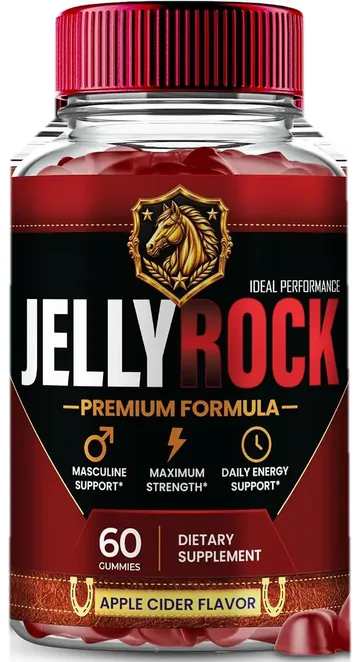
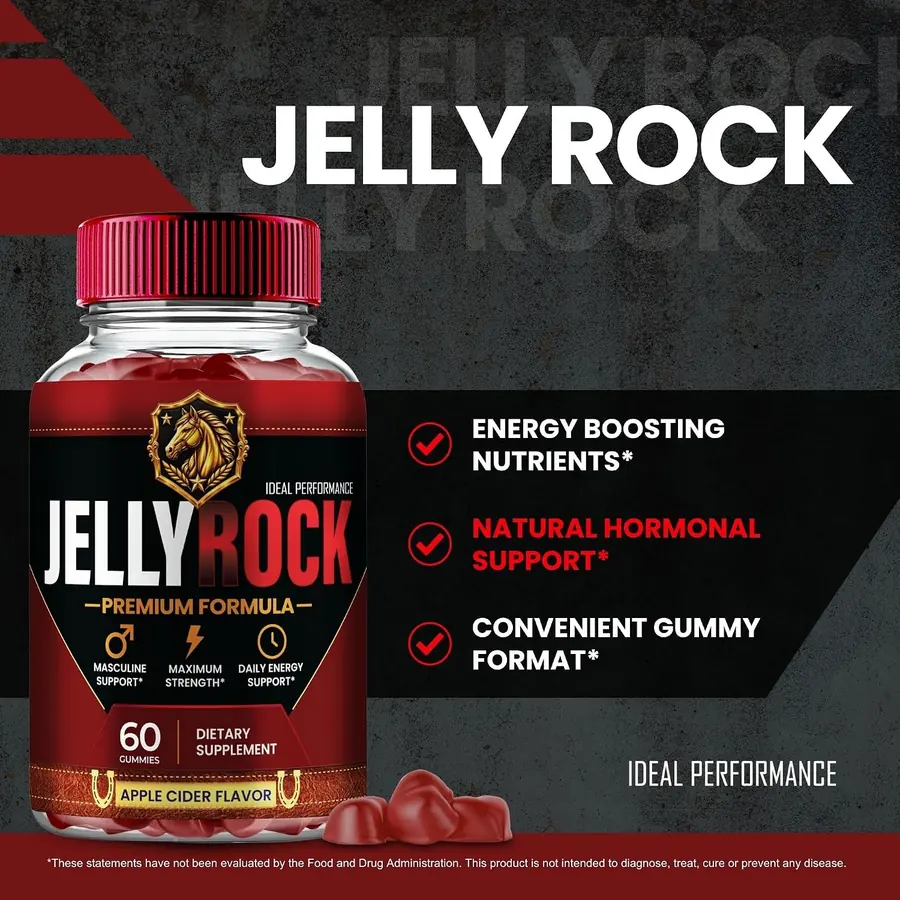
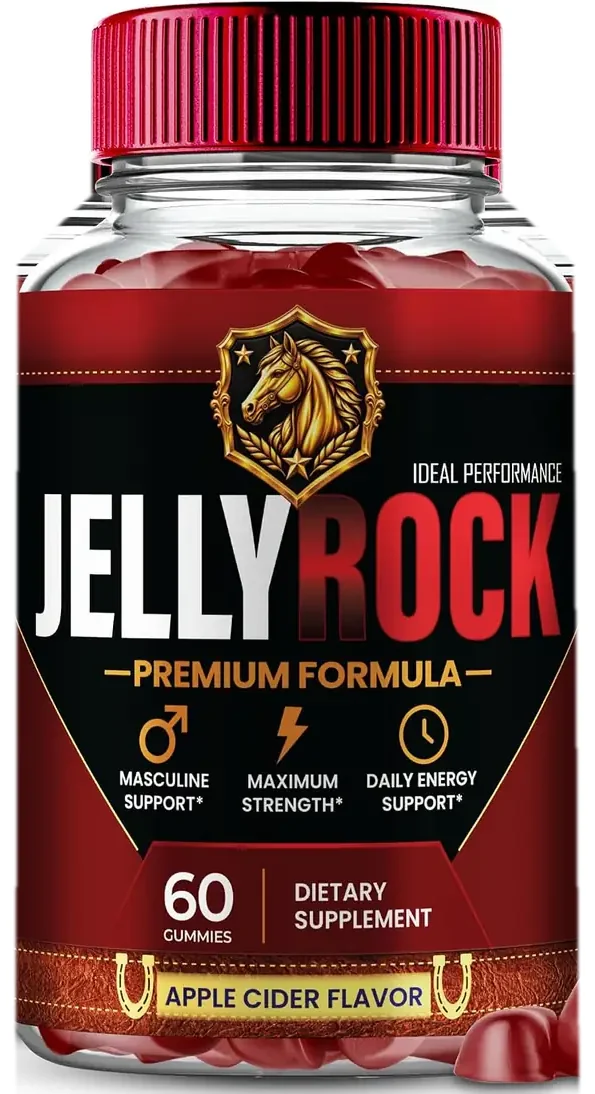
Also compare any jar you receive with the real one: clear plastic, red ribbed cap, red-and-black label with a gold horse-head crest, red gummies, and “Distributed by: Ideal Performance, Sheridan, WY 82801.”
How does Jelly Rock compare with other products?
People type “Jelly Rock vs” and add another name. We do not compare it with named products here, because we have no verified facts about them. We offer the method instead. Run the seven checks above on each label, put the answers side by side, and compare the cost per day.
If another label lists an ingredient with real evidence and prints a dose, that is a point in its favor. If it hides amounts in a blend, that is a point against. Judge each product by the jar, not by the claims on its box.
What should you do next?
Pick the one check that worries you most and start there. If it is Check 6, book the blood test. If it is Check 5, reread the FDA wording on the jar. If it is Check 7, call the order desk and ask for the return window in days before you pay.
Do not try to settle all seven in one evening. A careful shopper answers them over a few days and sleeps on the decision.
Sources used in this article
- NIH Office of Dietary Supplements. Vitamin B12: Fact Sheet for Health Professionals.
- NIH Office of Dietary Supplements. Folate: Fact Sheet for Health Professionals.
- NIH Office of Dietary Supplements. Iodine: Fact Sheet for Health Professionals.
- Mayo Clinic. Apple cider vinegar for weight loss: Does it work?.
- U.S. Food and Drug Administration. Daily Value on the Nutrition and Supplement Facts Labels.
- The Jelly Rock jar label and the pages of this site: Supplement facts, Who JellyRock is for, JellyRock FAQ.
Frequently asked questions
Do testosterone booster gummies work?
It depends on what is in them. A label with no ingredient known for testosterone, like Jelly Rock’s, gives you no reason to expect it. A doctor’s blood test is the way to know if your testosterone is low.
Is Jelly Rock a testosterone booster?
No. Nothing on the panel is known to act on testosterone. Natural hormonal support is wording from a listing image, not a panel ingredient.
Are testosterone boosters safe?
That depends on the ingredients and on your health and medicines. Read the label, check for interactions and ask a doctor or pharmacist.
Are male enhancement pills FDA approved?
No dietary supplement is FDA approved. The label must say that its claims have not been evaluated by the FDA.
What should I check on any men’s gummy label?
Check for a real ingredient, a printed dose, claims that match the panel, safety notes, a named distributor and a written refund route.
Is a stamina supplement better than sleep and training?
No. Sleep, strength training, food, water and treating low B12, iron or thyroid problems matter most for energy and stamina.
Our view
Our honest summary: gummies are a nice format and a poor guarantee. The label is what counts. Jelly Rock’s label is open about its amounts, which is good, and it contains no ingredient known for testosterone, which is the main fact for this topic.
If you are worried about testosterone, get a test. If you want a plain B-vitamin, iodine and vinegar gummy and you are fine with gelatin and a little sugar, Jelly Rock is a fair choice to consider. Do not buy it to raise hormones, because nothing on the panel suggests it will.
Last updated . Written by the JellyRock Editorial Desk and medically reviewed by Dr. Casey McCraw, MD.
Want to see the jar for yourself?
If you now know what to look for on a men’s gummy label, you can judge Jelly Rock on its own facts. The order page shows the price and the return route.
Sold through a U.S. retail desk for JellyRock. This site is not the manufacturer and earns when you buy.